


Why Should Buyers Compare jinglitools Power Wrenches Before Purchase?
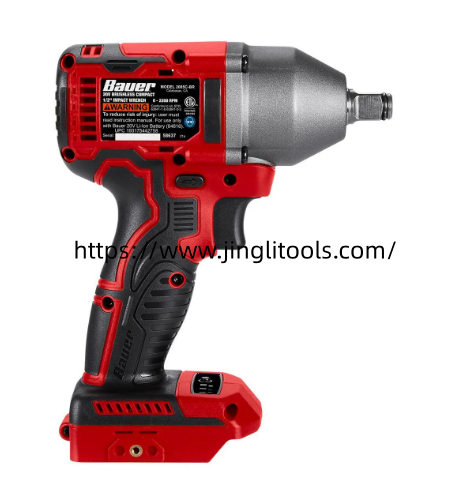
Power Wrenches can play an important role in repeated fastening tasks across workshops, maintenance departments, assembly areas, and industrial workplaces. Buyers should not make a purchasing decision by looking at one specification alone. Application requirements, fastener dimensions, torque range, operating frequency, socket compatibility, handling characteristics, maintenance arrangements, and supplier services all deserve attention. A practical evaluation can help businesses select equipment that corresponds with their actual working conditions.
Start With Fastener Requirements
The size and type of fasteners used in daily work should be identified before comparing equipment. Automotive servicing may involve a variety of component sizes, while machinery assembly can require repeated fastening across standardized parts.
Buyers can create a simple list of commonly used fasteners and record the required tightening range for each application. This makes it easier to determine which equipment specifications are genuinely useful.
For distributors, understanding the fastening requirements of target customers can also help with inventory planning. Different industries may require different configurations, so a clear customer profile can support more practical product selection.
Consider Frequency of Use
The number of fastening operations performed each day can influence the appropriate equipment choice. A workshop handling occasional maintenance jobs may have different requirements from an assembly environment where operators repeat similar tasks throughout a shift.
Buyers should consider average daily workload, expected operating periods, and the number of people who will use each unit. These details can help determine whether the selected equipment is suitable for occasional work or regular professional use.
A purchasing team should also consider future demand rather than looking only at current workload. This is particularly useful for businesses planning equipment expansion.
Examine Physical Dimensions
Equipment dimensions can affect accessibility in real working environments. A bulky design may be difficult to position around narrow spaces, while a compact configuration can be easier to maneuver around certain components.
Buyers should therefore examine length, weight, balance, and overall shape. If technicians frequently work above shoulder height or inside restricted areas, handling characteristics can become especially relevant.
The physical design should correspond with the positions in which technicians normally perform their tasks. Product photographs and specification sheets can provide initial information, but sample evaluation may offer additional insight.
Review Control Functions
Control layout is another detail worth checking. Operators should be able to access the trigger, switches, and adjustment functions without unnecessary movement.
Businesses can review whether the controls are suitable for the intended working process. If different operators will share the equipment, straightforward controls may also make basic training easier.
For professional users, small ergonomic details can influence how conveniently equipment fits into established workshop routines.
Check Accessories and Compatibility
A tool is rarely used completely on its own. Sockets, chargers, batteries, adapters, cases, and other accessories may all form part of the working setup.
Before ordering, buyers should check which accessories are included and which items need to be purchased separately. Compatibility with existing workshop equipment can also help reduce unnecessary additional purchases.
For distributors, accessory availability can influence how easily a complete package can be offered to customers. It is worth discussing accessory options with the manufacturer before finalizing a larger order.
Ask About Maintenance
Regular maintenance should be considered during the purchasing stage rather than after equipment has already been installed in the workplace.
Buyers can ask about cleaning procedures, lubrication requirements, inspection intervals, storage conditions, and commonly replaced components. Clear maintenance information can help workshops organize routine servicing.
Businesses operating multiple units should also consider spare-part availability. A reliable supply arrangement can make equipment management easier when components eventually require replacement.
Evaluate Production and Customization Services
Commercial buyers often have requirements beyond the basic product specification. Packaging, labeling, product configuration, accessories, manuals, and order quantities may vary between markets.
Before confirming a bulk purchase, buyers can discuss customization possibilities, production schedules, inspection arrangements, packaging requirements, and shipping preparation with the manufacturer.
jinglitools offers fastening equipment for different workshop and industrial applications, allowing buyers to discuss their intended use and product requirements directly with the manufacturing team. This type of communication can help businesses clarify specifications before committing to an order.
Compare Total Purchasing Requirements
The purchase price is only one part of equipment evaluation. Buyers should also consider accessories, replacement components, maintenance, charging arrangements, packaging, transportation, and expected service requirements.
A simple comparison sheet can make these factors easier to review. Businesses can place several candidate models side by side and assess them against the same application criteria.
This approach can help purchasing teams avoid decisions based solely on individual specifications and instead focus on whether the complete equipment package fits their operational needs.
For businesses looking to review available fastening equipment and discuss suitable configurations with jinglitools, the product range is available at https://www.jinglitools.com/product/ Buyers can use the product information as a starting point for comparing models according to their applications, working conditions, and purchasing requirements.


 English
 Arabic
 French
 Spanish
 Portuguese
 Deutsch
 Turkish
 Dutch
Dutch
 Italiano
 Russian
 Romaian
 Greek
Greek