


What Role Does Qianxunele Electric Kettle Thermostat Coupler Play
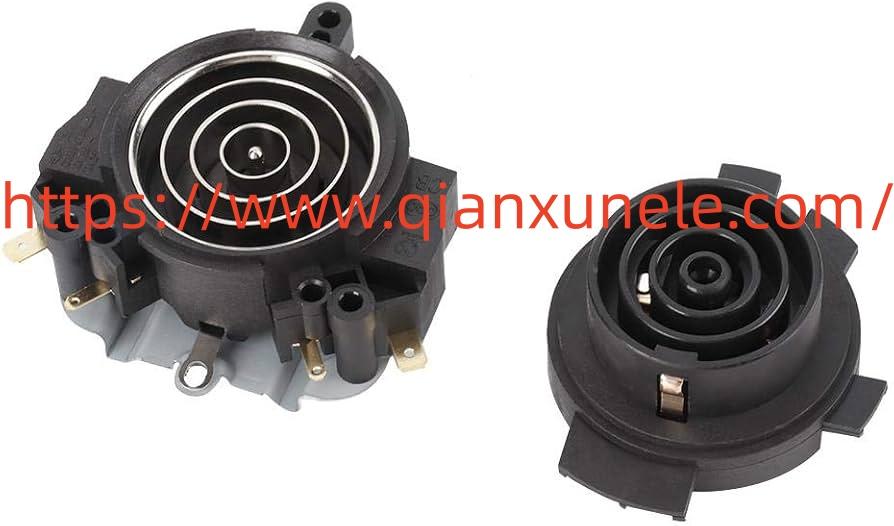
Electric Kettle Thermostat Coupler is a compact appliance component that connects electrical power transmission with automatic thermal control. When the vessel is positioned on its powered base, conductive contacts establish the circuit needed for the heating element. As the water temperature rises, heat and steam activate an internal mechanical structure. Once the designed operating condition is reached, the mechanism changes the contact position and interrupts the electrical circuit. This creates an automatic transition from active heating to an inactive state without requiring constant manual monitoring.
How Power Reaches The Heating Element
The appliance normally contains a powered base and a removable vessel.
The base receives electricity from the external supply and transfers it through a contact assembly when the vessel is correctly positioned.
Once the contacts engage, current travels toward the heating element.
The element converts electrical energy into heat, which then passes into the water.
This arrangement allows the user to lift the vessel away from the base without dealing with a permanent wired connection.
The contact assembly therefore performs an important connection function before the thermal control process begins.
What Happens During Normal Heating
After power is activated, the heating element begins transferring energy into the water.
The temperature gradually increases as the heating process continues.
Near boiling, steam begins to form inside the vessel.
Part of this steam can travel through an internal passage toward the sensing mechanism.
The rising thermal condition then activates a mechanical response.
Instead of depending entirely on electronic control, the appliance can use physical movement to change the state of the electrical contacts.
This creates a direct relationship between the water heating process and power interruption.
How The Mechanical Response Works
A common design uses a bimetal element.
This element consists of two bonded materials that respond differently to heat.
As the temperature increases, the materials expand at different rates.
The resulting movement causes the element to bend or snap.
That movement is transferred to a switching structure inside the assembly.
When the activation point is reached, the contacts move from the conducting position toward the open position.
The heating circuit is then interrupted.
This principle provides a relatively straightforward way to connect thermal changes with electrical switching.
Why Contact Movement Matters
The heating element needs a stable electrical path during normal operation.
At the same time, that path must be interrupted when the intended heating condition has been reached.
The internal contacts provide this transition.
When the contacts remain engaged, current can continue flowing.
When the mechanical mechanism activates, the contacts separate and stop the current.
A clear switching action can help maintain a defined difference between the heating state and the inactive state.
Contact pressure, alignment, spring force, surface condition, and internal positioning can all influence this process.
For manufacturers, these details are worth reviewing during component evaluation.
Steam Routing Affects Thermal Activation
The sensing mechanism depends on receiving the intended thermal input.
For this reason, the internal steam route deserves attention during product development.
The passage needs to direct steam toward the sensing area in a suitable manner.
The surrounding housing can influence the path.
Seals and structural components can also affect how heat moves through the assembly.
If the internal layout changes, the thermal response may change as well.
Engineers should therefore evaluate the control component together with the complete appliance structure rather than considering the component independently.
This approach can provide a clearer understanding of how the finished product behaves during actual operation.
Automatic Power Interruption
The automatic shutoff sequence can be divided into several stages.
Water receives energy from the heating element.
Temperature continues rising.
Steam develops as boiling approaches.
Thermal energy reaches the sensing element.
The bimetal structure changes shape.
Mechanical movement shifts the contacts.
The electrical path opens.
The heating element stops receiving power.
This sequence allows the appliance to finish its normal heating cycle without requiring the user to remain beside it throughout operation.
Protection Against Abnormal Heating
Automatic shutoff during normal boiling is different from protection against insufficient water.
When there is little or no water available, the heating element may experience an abnormal temperature increase.
Some control assemblies include an additional protective mechanism that responds to this condition.
When excessive heat develops near the heating element, the protective function can interrupt power.
After cooling, certain designs can return toward their operating position.
This additional response can form part of a broader appliance protection arrangement.
The exact protection method depends on the design of the control assembly and the finished product.
Why Base Alignment Is Important
The removable vessel needs to sit correctly on its powered base.
Correct positioning allows the conductive contacts to engage as intended.
If alignment is unsuitable, electrical continuity may become inconsistent.
The physical shape of the base, contact arrangement, housing, and mounting structure therefore needs to work together.
Manufacturers can review the complete assembly during development to check whether the selected component fits the intended housing.
Mechanical stability is also relevant because the user may repeatedly place and remove the vessel during everyday use.
A suitable structure should accommodate this repeated movement within the intended product design.
Material And Construction Considerations
The materials used inside the assembly can influence electrical and thermal behavior.
Conductive areas need to support the intended current path.
Insulating sections need to separate conductive areas where required.
Mechanical parts need to maintain their intended movement within the housing.
Thermal elements need to respond to changes in temperature according to the application.
These factors should be considered together rather than separately.
For OEM manufacturers, reviewing construction details during the development stage can help identify whether the component matches the planned appliance architecture.
Matching The Component With Product Design
Different appliances can have different internal layouts.
The available installation space may vary.
The position of the heating element can change.
Steam routing can also differ between product structures.
The electrical circuit may require a particular contact arrangement.
For these reasons, component selection should begin with the requirements of the finished product.
Manufacturers can review mounting dimensions, contact configuration, thermal behavior, reset characteristics, insulation, and protective functions before confirming a suitable design.
Testing within the complete appliance can then provide additional information about actual operating behavior.
Supporting OEM Development
For manufacturers developing new appliance products, communication between the component supplier and engineering team can simplify the evaluation process.
The supplier can review application requirements such as mounting structure, electrical connection, thermal response, and intended protection functions.
This allows the component to be considered within the actual product environment.
Qianxunele supplies control components for appliance manufacturers working with automatic heating and thermal protection applications.
Its product range includes solutions intended for different connection structures and operating requirements.
For OEM projects, the selection process can focus on compatibility with the finished product rather than relying on a general purpose configuration.
A Practical Approach To Component Selection
A useful evaluation process can begin with the electrical circuit.
Next, engineers can review the physical installation position.
The steam path and thermal sensing area should then be considered.
After that, contact movement and automatic interruption can be assessed.
Protection against abnormal heating can also be reviewed according to the appliance design.
Finally, manufacturers can test the complete assembly under normal operating conditions.
This process helps connect component characteristics with actual product requirements.
Qianxunele For Appliance Control Applications
Qianxunele provides control components for manufacturers developing household heating appliances and related products.
Its solutions can be considered for applications requiring electrical connection, automatic power interruption, thermal response, and protection against abnormal heating conditions.
For product development teams, component selection can be discussed around the actual housing structure, circuit arrangement, thermal environment, installation method, and intended operating process.
This application based approach gives manufacturers a practical way to evaluate compatibility before production planning.
The related product range and application information are available at https://www.qianxunele.com/product/kettle-thermostat-coupler/


 English
 Arabic
 Spanish
 Portuguese
 Deutsch
 Turkish
 Dutch
Dutch
 Italiano
 Russian
 Romaian
 Portuguese (Brazil)
 Greek
Greek