


Which Features Should Buyers Compare in jinglitools Air Compressor Equipment?
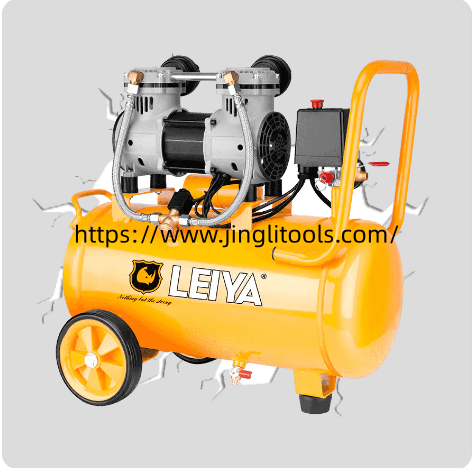
Air Compressor selection should start with the actual requirements of the workshop rather than a single specification. Buyers should examine working pressure, output capacity, storage volume, operating frequency, electrical conditions, noise, installation space, and maintenance requirements. The intended pneumatic tools should also be considered because different applications can create different consumption patterns. A clear assessment of daily tasks can help purchasing teams select equipment that fits their workflow and avoid unnecessary specifications.
Define the Main Workshop Applications
Before comparing models, buyers should identify exactly how the equipment will be used. Common applications may include powering impact tools, nailers, spray equipment, cleaning devices, inflation equipment, and other pneumatic products.
Each application can have its own pressure and consumption requirements. A workshop using one tool intermittently may have different needs from a facility operating several devices throughout the day.
Creating a list of commonly used tools is a useful starting point. Buyers can record operating pressure, estimated consumption, usage frequency, and whether several devices may operate simultaneously.
Review Working Pressure
Pressure requirements should be compared with the specifications of the tools that will be connected to the system. Buyers should distinguish between maximum pressure and normal operating pressure when reviewing technical information.
A unit reaching a particular maximum value does not necessarily mean that it can continuously provide the required output under every working condition.
For this reason, purchasing teams should focus on the pressure range required during normal operation. Asking the supplier for detailed performance information can also make comparisons easier.
Evaluate Output Capacity
Output capacity is another important factor. Buyers should check how much compressed gas the equipment can provide under the relevant working conditions.
If the workshop frequently operates several pneumatic devices, the combined demand should be considered. Selecting a configuration according to only one small tool may create insufficient supply when additional equipment is connected.
On the other hand, purchasing significantly more capacity than the workshop requires can increase equipment size, electrical demand, and initial investment. Matching output with realistic usage is therefore a practical approach.
Look at Storage Volume
The receiver tank stores compressed gas and provides a reserve when demand changes. However, storage volume should be evaluated together with output capacity and usage patterns.
A smaller tank can be suitable for intermittent tasks, while a larger configuration may be useful when the workshop experiences changing demand throughout the workday.
Buyers should also consider available floor space. The selected configuration needs enough room for installation, ventilation, inspection, and routine servicing.
Check Electrical Compatibility
Electrical requirements should be confirmed before purchasing. Voltage, frequency, input rating, plug type, and available electrical capacity should match the intended installation location.
This is particularly important for international buyers because electrical standards can differ between countries and regions.
The purchasing team should provide the supplier with information about the destination market and workshop power supply. This allows the supplier to confirm whether the selected configuration corresponds with the installation environment.
Consider Noise During Daily Operation
Noise can be an important consideration when equipment is installed close to operators. Small workshops, indoor maintenance rooms, and service areas may have different requirements from large industrial spaces.
Buyers should review the stated sound level and consider the equipment location before ordering. Positioning also affects access for inspection and maintenance.
A suitable installation area should provide sufficient ventilation and clearance while keeping the equipment convenient for routine servicing.
Examine the Oil-Free Configuration
An oil-free configuration may be suitable for applications where oil contamination needs to be limited. This can be relevant to certain workshop tasks and environments where cleaner compressed gas is preferred.
However, oil-free operation does not eliminate routine maintenance. Filters, connections, cooling areas, electrical components, and other parts still require regular inspection according to the supplier instructions.
Buyers should ask about cleaning procedures, replacement components, recommended inspection intervals, and warranty arrangements before completing a purchase.
Think About Portability and Workspace
The physical layout of a workshop can influence equipment selection. Some users may keep the unit beside a fixed workstation, while others may need to move it between service areas.
Before ordering, measure the available space and check the equipment dimensions. Weight, wheels, handles, cable arrangement, and storage requirements may also influence everyday convenience.
If mobility is important, buyers should consider how frequently the equipment will be relocated and whether the workshop floor is suitable for movement.
Review Accessories and Connections
Hoses, regulators, filters, fittings, connectors, and other accessories can affect system compatibility. Buyers should confirm the outlet configuration before purchasing and check whether existing accessories can be reused.
For distributors, compatibility can also influence inventory planning. Offering suitable combinations of equipment and accessories may make product selection easier for different customer applications.
It is useful to request detailed accessory information from the supplier rather than assuming that every connection standard will be identical.
Compare Maintenance and Service Support
Maintenance requirements should be discussed before the equipment arrives. Buyers can ask about replacement parts, service procedures, warranty coverage, inspection requirements, packaging, and technical support.
For workshops using equipment frequently, access to replacement components can simplify maintenance planning. Distributors may also want information about spare parts and technical documentation when preparing products for their customers.
A supplier that provides clear technical information can make communication easier throughout the purchasing process.
Match the Model With Your Purchasing Plan
Different workshops have different purchasing priorities. A small repair shop may focus on compact dimensions and moderate usage, while a factory maintenance department may place greater emphasis on output capacity, operating frequency, and service arrangements.
jinglitools offers several configurations for workshop and industrial applications, giving buyers different specifications to compare according to their actual requirements. Product details can be reviewed before contacting the supplier so that questions about capacity, electrical conditions, accessories, and installation can be discussed more efficiently.
For factories, distributors, maintenance teams, and workshop operators, careful preparation can make equipment selection more organized. Buyers interested in reviewing available models and related product categories can visit the https://www.jinglitools.com/ and compare suitable options according to their pneumatic tool requirements, workspace, operating schedule, electrical conditions, and maintenance plans.


 English
 French
 Spanish
 Portuguese
 Deutsch
 Turkish
 Dutch
Dutch
 Italiano
 Russian
 Romaian
 Portuguese (Brazil)
 Greek
Greek