


How Does Qianxunele Anti-Drying Kettle Thermostat Improve Appliance Safety
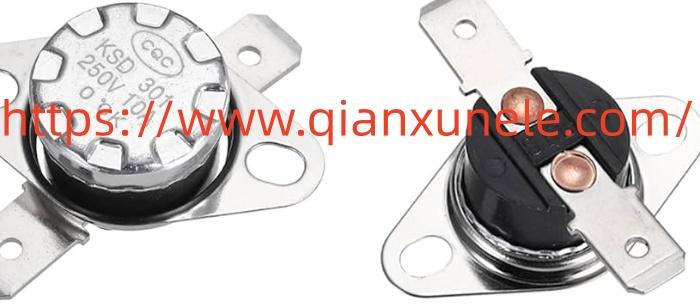
Anti-Drying Kettle Thermostat technology provides a protective function for electric water heating appliances by responding to abnormal temperature conditions. When insufficient water remains around the heating area, temperature can rise much faster than during normal operation. A suitable control component can detect this change and interrupt the electrical circuit, helping reduce unnecessary heat exposure and protecting surrounding parts from excessive thermal stress. Qianxunele provides related temperature control components for appliance manufacturers and product developers.
Why Can Abnormal Heating Become a Concern?
An electric water heating appliance normally transfers heat into water. When the water level becomes too low, the heating assembly may no longer have the same cooling effect provided during ordinary operation.
As a result, the temperature around the heating area can rise rapidly. If electrical power continues without interruption, surrounding materials and internal components may experience additional thermal stress.
A protective temperature component provides a way to respond to this condition automatically. Instead of relying entirely on the user to notice the problem and switch the appliance off manually, the electrical system can respond when the temperature reaches its designated protection point.
This principle is commonly associated with boil dry protection in electric water heating appliances. Current product information from Qianxunele describes protection functions that interrupt heating when abnormal temperature conditions occur.
How Does Temperature Sensing Support Protection?
Temperature sensing is central to the protection process. The sensing element responds to heat generated around the heating assembly and changes its operating state when a defined temperature condition is reached.
In a conventional heating cycle, water absorbs energy from the heating surface. When water is absent or insufficient, the temperature around the assembly can increase more quickly.
The control component is designed to respond to this change. Once the protection condition is reached, the electrical path can be interrupted, stopping further energy delivery to the heating element.
This process does not require the user to monitor the appliance continuously. It provides an additional layer of automatic response within the appliance control system.
What Happens After Power Is Interrupted?
Different appliance designs can use different reset arrangements. Some systems are designed to remain open until the unit has cooled sufficiently, while others may use a reset mechanism that restores operation under defined conditions.
The choice depends on the appliance structure and its intended operating method. Manufacturers should therefore consider the required protection logic before selecting a component.
Reset behavior is particularly important during product development because it affects how the appliance responds after an abnormal heating event. The component should work together with the heating assembly, power base, sensing structure, and control circuit rather than being evaluated as an isolated part.
Qianxunele product information includes self reset protection arrangements for certain appliance components, showing how reset behavior can be incorporated into different product designs.
How Can It Support Product Design?
For appliance manufacturers, safety related component selection begins with the electrical and mechanical requirements of the finished product.
Voltage, current, operating temperature, protection temperature, mounting position, connection structure, insulation requirements, and reset method can all influence compatibility.
The physical relationship between the heating assembly and sensing element is also important. If the sensing position does not correspond with the actual heat distribution of the appliance, the response may not match the intended operating conditions.
Manufacturers therefore need to evaluate the complete heating system during product development. Component selection should be based on actual design requirements rather than relying only on general appearance or dimensions.
Why Does Material Compatibility Matter?
Electric water heating appliances can use stainless steel, plastic, glass, aluminum, and combinations of different materials. Each construction can influence heat transfer and the location where temperature changes are detected.
Stainless steel bodies, for example, can distribute heat differently from plastic structures. The heating plate design, mounting method, base structure, and contact position can also influence the temperature around the sensing area.
Qianxunele technical information notes that compatibility between the appliance material and temperature sensing arrangement should be considered when selecting a suitable component.
This makes application evaluation an important part of purchasing. The same component should not automatically be assumed to suit every appliance design.
How Does Qianxunele Support Appliance Manufacturers?
Qianxunele offers temperature control and protection components for electric appliance applications. Its product range includes components designed for automatic heating interruption, temperature sensing, electrical connection, and protection functions.
For manufacturers, a practical selection process should consider the appliance structure, electrical requirements, temperature range, installation method, reset behavior, and intended working conditions.
A suitable component can become part of a coordinated protection system involving the heating assembly, sensing mechanism, power connection, and control circuit. This approach allows manufacturers to evaluate safety functions as part of the complete appliance design.
When developing or sourcing components for electric water heating products, manufacturers can review available options and application information directly through the Qianxunele website at https://www.qianxunele.com/


 English
 Arabic
 French
 Spanish
 Portuguese
 Deutsch
 Turkish
 Dutch
Dutch
 Italiano
 Russian
 Romaian
 Greek
Greek